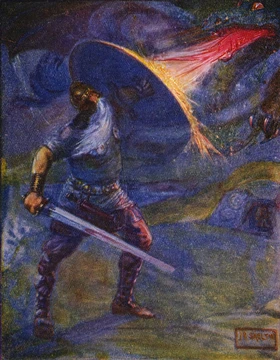
Elfshot
A supernatural ailment from elf arrows causing sudden pain.
Elfshot, also spelled elf-shot, is a medical condition described in the Anglo-Saxon medical text Wið færstice. It was believed to be caused by elves shooting invisible elf-arrows at a person or animal, most often cattle, resulting in sudden shooting pains localized to a particular area of the body. Modern diagnoses might include rheumatism, arthritis, muscle stitches, or cramps. The term is variously understood across different contexts, sometimes referring to disease caused by elves using projectiles, to witchcraft involving projectiles without elves, or to prehistoric arrowheads believed to be used by fairies or witches to cause harm or serve as protective amulets.
- field
- Folk medicine, folklore
- known_for
- Supernatural cause of sudden shooting pains attributed to elf arrows
- culture
- Anglo-Saxon and Scandinavian Europe
- associated_text
- Wið færstice
Lore & Background
Before the causes of certain diseases were scientifically evidenced, they were often attributed to supernatural phenomena, such as the malevolent actions of elves. The Old English spell Gif hors ofscoten sie, 'if a horse is elf-shot,' alludes to magical elf-shot, though the term aelfsogoða, describing internal pain from jaundice or a disorder of bile, may be a more suitable fit. Historical claims also exist of witches firing elf-arrows; per the testimony of Scottish accused witch Isobel Gowdie, these were given by the Devil and fired by flicking with the thumb rather than shot with a bow. Belief in elf-shot persisted into the 20th century in Scotland, though more modern elves seem to have concentrated their attentions on animals.
Reader's Guide
Elfshot represents a significant intersection of Anglo-Saxon and Scandinavian folk medicine, supernatural belief, and early attempts to explain physical ailments. The term's ambiguity—encompassing disease from elf projectiles, witchcraft without elves, and prehistoric arrowheads used as amulets—has led to considerable scholarly confusion, with different sources applying divergent definitions and missing connections between them. Preventive and curative practices included visiting Church on the first Sunday of the season, using charms made of feverfew, red nettles, and waybread, or placing a sewing-needle folded into a psalm-book page into a beast's hair. For horses, cures involved mixing dock seed, Irish wax, and holy water, with a priest singing twelve masses over them. Neolithic and Bronze Age flint arrowheads were collected and used in folk magic, interpreted as fairy darts that could both cause and cure illness. Elf-arrows were sometimes worn as amulets, occasionally set in silver, as a charm against witchcraft. The legacy of elfshot endures as a case study in how pre-scientific cultures rationalized pain and disease through supernatural agency, and how material artifacts like flint arrowheads became embedded in folk healing traditions.
Did You Know?
- Elfshot is described in the Anglo-Saxon medical text Wið færstice.
- Modern diagnoses for elfshot might include rheumatism, arthritis, muscle stitches, or cramps.
- Scottish accused witch Isobel Gowdie testified that elf-arrows were given by the Devil and fired by flicking with the thumb.
- Neolithic and Bronze Age flint arrowheads were interpreted as fairy darts and used as both cause and cure of illness.
More in English folklore 1-24
Spotted an error? Know more?
This is a living reference — every entry is fact-audited, and reader corrections feed straight into our audit queue. Suggest an edit · See this site's audit record